Notun
Chuyu Zhang (M.Sc)
Darya Holub (M.Sc)
Hankai Ye (M.Sc)
2023 – 2024
Coastal areas of Bangladesh are becoming increasingly vulnerable to the unpredictable and intensifying impacts of seasonal flooding, as well as cyclones caused by climate change. These natural disasters cause great destruction to the local population, especially those living in the Coastal Area. Flooding during the monsoon season renders large tracts of land unsuitable for construction, while annual cyclones repeatedly destroy homes, leaving little time or resources for recovery. Existing approaches to solving these problems often focus on centralized measures that do not consider the local populations real needs and the regions specific conditions.
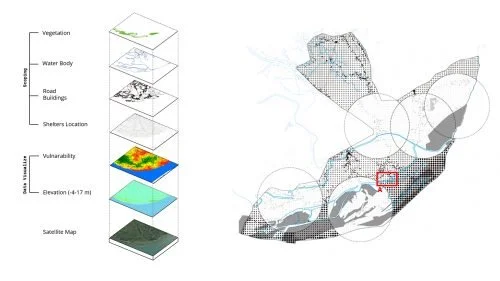
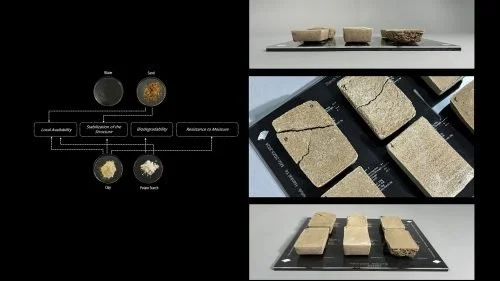
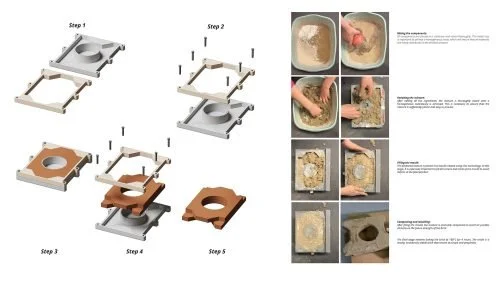
The thesis employs a multi-layered approach, encompassing urban planning, architectural design, and structural analysis, to develop strategies and solutions that mitigate the impact of disasters on Coastal residential areas. It utilizes advanced computational methods to reduce the effects of flooding, mitigate wind speeds, and decrease potential damage to residential zones. It is concurrently developing wind-resistant buildings by exploring the potential of local materials and prefabricated connectors and integrating mixed reality technology to design rapid assembly systems that enhance the quality and increase community engagement, incorporating local experiences into disaster management to make disaster response more effective the projects also delves into biomaterial research by developing biodegradable bricks that reinforce road embankments and support vetiver grass’s growth, known for its strong root system that helps stabilize the embankment structures.
Through these comprehensive measures, the project aims to enhance the community’s resilience and adaptability to climate change.