
-
As the discipline of architecture evolves, there is an urgent need to bridge the gap between complex digital design paradigms and sustainable fabrication. This paper investigates the innovative potential of Topologically Interlocking Assemblies (TIAs) through a synergy of material computation and robotic fabrication. TIAs offer a structural approach where blocks are held together solely by their geometric configuration and boundary constraints, functioning as self-supporting systems without traditional adhesives. Focusing on a 1:1 scale structure, this project introduces a lightweight concrete mixture incorporating perlite and soil that reduces block density to 50% of the normal range while maintaining compression strength. Central to the methodology is a robotic 3D-printing workflow used to create bespoke, reusable PLA formworks. By rationalizing diverse block geometries into four unique modules, the workflow enabled the precise casting of complex osteomorphic components while drastically reducing construction waste. The final prototype demonstrates a modular, binder-free assembly that promotes the recycling of formworks and structural components. The results establish a new design paradigm where material efficiency, interlocking assemblies, and robotic fabrication converge to produce high-performance, demountable architectural interventions.
-
This research proposes a scalable orbital habitat designed to ease humanity's environmental impact by relocating a portion of human activity into space. The research explores how a self-sustaining system in Earth-Moon orbit could support large populations while remaining closely linked to Earth. Building on life-support principles developed for the International Space Station, the study scales closed-loop cycles for air, water, waste, and food to accommodate up to two hundred thousand inhabitants, supported by solar energy and regenerative ecological systems. The colony's structure is organised through a design database informed by NASA research, categorising modules into residential, public, infrastructural, and life-support classes. These modules are combined through a voxel-based workflow and arranged using a generative system influenced by neighbour rules and urban conditioning. A parametric model, integrated with a multi-objective evolutionary algorithm, optimises life-support performance, energy capture, and spatial qualities, while a weighted selection model evaluates connectivity and feasibility. The results demonstrate the value of combining rule-based growth, performance evaluation, and designer-led selection in shaping large-scale orbital habitats.
https://papers.cumincad.org/cgi-bin/works/paper/caadria2026_335
-
This paper specifies a system-level loam-based modular kit-of-parts for This paper presents a modular, loam-based kit-of-parts designed for heritage-sensitive infill in Varanasi, India. Addressing the city's dense urban fabric and high pilgrim density, the system prioritizes rapid, low-disruption assembly and off-site prefabrication to minimize interference with religious processions and local commerce. The methodology utilizes a test-calibrated pipeline linking soil mix design to structural performance. Field screening identified an optimal base loam (60% sand, 25% silt, 18% clay), which was bio-stabilized using lime pozzolana, barley straw, and sugarcane bagasse. Structural testing confirmed high-performing finalists with compressive strengths of and significant thermal damping properties. Full-scale panels are integrated into standardized glulam frames using a sliding top-groove detail, with rubber gaskets and horizontal battens managing hygroscopic movement. By utilizing abundant Ganges alluvium and CNC-milled molds, this system ensures material circularity and industry-grade precision. The result is a scalable, passive-cooling solution suitable for hot-humid climates.
https://papers.cumincad.org/cgi-bin/works/paper/caadria2026_498
-
This research reimagines the waste heat produced by data centres as a harnessed resource for urban systems. As global computation demands rise exponentially, these infrastructures consume significant energy while releasing heat directly into the atmosphere. The study proposes a Triply Periodic Minimal Surface (TPMS)-based material system infilled with Phase-Change Material (PCM) to capture, store, and redistribute waste heat for passive thermal regulation in adjacent spaces. The research, encompassing PCM selection and TPMS geometry explorations, culminates in a proof-of-concept experiment mimicking a data centre setup. Results show that the proposed material system insert helps regulate temperature up to three times longer than the non-inserted alternative, effectively harnessing waste heat for passive thermal regulation. Informed by physical experiments, digital simulation studies frame the exploration space for shelled TPMS-based variants that enhance airflow management and thermal performance. Beyond efficiency, the research envisions a paradigm where computation and cultivation mutually coexist; suggesting that the excess heat generated by our data practices could feed back into the growing urban metabolism.
https://papers.cumincad.org/cgi-bin/works/paper/caadria2026_689
-
This paper investigates adaptive design strategies for heritage cities experiencing rapid densification because of population influx. It proposes a computational workflow that analyses the city's network, density and environmental conditions, generates and evaluates architectural interventions, recalibrating the urban context through iterative feedback. Using generative algorithms, the system synthesises socio-cultural and environmental datasets to produce context-sensitive, climate-responsive solutions. A kit-of-parts system based on local materials enables adaptability within dense historic fabrics, allowing configurations to be assigned and optimised according to spatial and environmental parameters. The workflow extends into a predictive framework through a machine learning model trained on optimised datasets to predict future spatial configurations. These morphologies are then re-integrated into the urban network to inform the placement and impact of subsequent interventions, supporting an ongoing, adaptive evolution of the heritage fabric.
https://papers.cumincad.org/cgi-bin/works/paper/caadria2026_449
-
Co-evolutionary algorithms (CoEAs) mitigate the limitations of multi-objective evolutionary algorithms (MOEAs) by discretizing a complex and high-dimensional problem into interconnected elements. While the application of CoEAs in other fields is well established, CoEAs find little resonance in the architectural industry. The research compared the capabilities of CoEAs and MOEAs in resolving complex design scenarios through the simultaneous optimization of a tower morphology, its public-private spatial distribution, and its structural system in Hong Kong. The research optimized the design scenario through a CoEA workflow by decomposing the design into discrete, interconnected parts. The workflow employed a novel, cooperative CoEA developed by the authors, which continuously alternated between evaluating each population independently and both collectively. In parallel, a traditional MOEA workflow, where populations evolved as a single system, was employed using the multi-objective optimization engine Wallacei as a baseline comparison. A comparison of the results from each workflow highlighted CoEAs' capability to better rationalize complex optimization challenges and generate balanced solution sets. By decomposing a complex system into its interconnected parts, the research demonstrated how CoEAs facilitate deeper understandings of design problems by emphasizing the relational qualities between components, thereby enabling designers to better frame the problem as compared to MOEAs.
https://papers.cumincad.org/cgi-bin/works/paper/caadria2026_210
-
Understanding pedestrian movement is a tenet of urban design, crucially linked to the viability of urban spaces. As such, a subset of this discipline focuses on the frameworks for modelling and simulating such behaviours. Designers traditionally employ pedestrian simulations to achieve this. However, these tools, such as Mass Motion and Legion, miss a key consideration: humans are social beings. Pedestrian movement is strongly influenced by the social characteristics of space and the social nature of others. This research investigated a novel, socially driven pedestrian simulation tool developed by the authors, called Kova PedSim (formerly H.I.V.E.), a Grasshopper3D plug-in which integrates social behaviours as a key algorithm to simulate human movement. The authors conducted a series of experiments using Kova PedSim which compared the performance of socially driven pedestrian simulations and traditional ones to quantify the benefits of such an approach. The presented work showcased the importance of embedding social characteristics into digital workflows. Using Kova PedSim, designers gain access to previously undiscovered metrics, allowing them to leverage new data-driven insights. This enables the opportunity to evolve beyond using pedestrian simulations as simply analytical tools and rather as generative workflows to meaningfully embed humanistic dimensions within the design process.
https://papers.cumincad.org/cgi-bin/works/paper/caadria2026_209
-
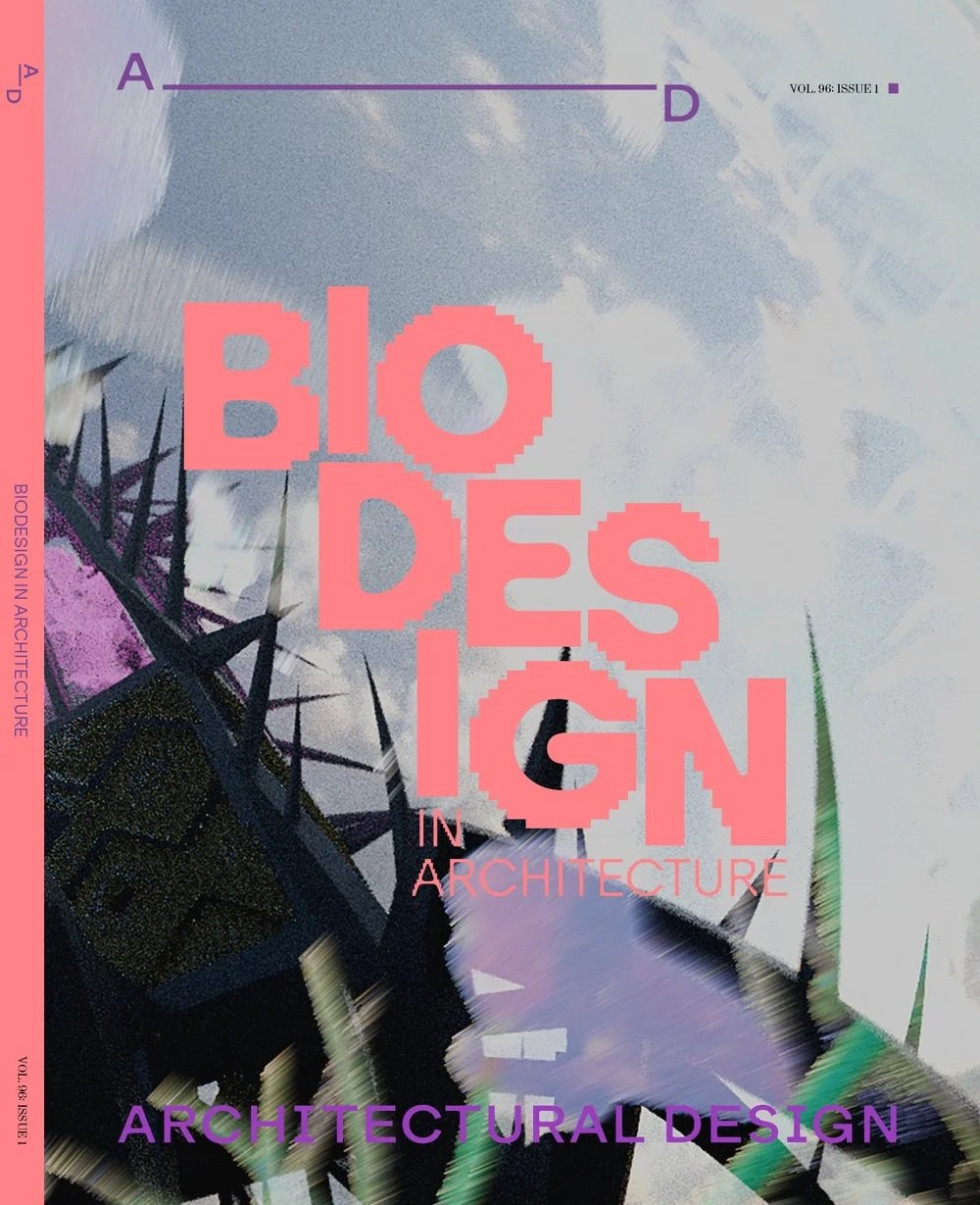
The relationship between architecture and nature stretches back millennia. Today, this relationship is being redefined as the discipline of biodesign seeds a transition toward an adaptive, collaborative approach to architecture that promotes an ethics of co-creation with nature, a politics that embraces marginalized traditions, and an economics grounded in ecological resilience. This issue of Architectural Design A—D traces the evolution of biodesign from speculative metaphor to dynamic design tool and practice, arguing that architecture is undergoing a reorientation toward living systems. Biodesign is no longer confined to laboratories or isolated prototypes; it is entering the public realm, reshaping how environments are imagined, constructed, and inhabited. In this shift, biology is more than a resource to be exploited—it is a collaborator, a model, and a medium. The contributors to this issue present architecture as a discipline grounded in reciprocity and regeneration. They advance an expanded discourse in which buildings behave as metabolically active systems that grow, digest, adapt, and decay, participating in ecological cycles rather than standing apart from them. This metabolic modality repositions architects as cultivators of biological processes, working with microbial intelligence and regenerative material flows.
These biotic negotiations of matter, energy, and information also explore how biotechnology and computational informatics together enable architectures that learn from and negotiate with living organisms. Here, artificial intelligence acts as an extended autonomic nervous system, embedding learned biological intelligence into materials and systems to produce unscripted, real-time responses. Across these trajectories—in living biocomposites, biodigital platforms, and relational, biotic architectures—the issue proposes that architecture decenters the human and conceives the built environment as indistinguishable from, and accountable to, the living ecologies it sustains.
-
This research introduces a two-stage optimization methodology for adaptive kinetic façades, prioritizing performance objectives to address occupant comfort and energy efficiency. The study explores various façade morphologies to tackle multiple, often conflicting, objectives. By progressively increasing design parameters, the methodology identifies optimal solutions through multi-criteria decision-making.
-
The presented research is situated between computational design, digital fabrication, and biomaterials within the framework of modular architecture. Mycelium-based composites provide a viable solution for bio-integrated construction, yet their application in the field is limited. Fabricated from mycelium, hemp substrate, and 3D printed organic formwork, the proposed material system is a user-friendly prototype for assembly and disassembly using plugand-play timber joinery. Developed for modular aggregation and architectural utility, the prototypes are subjected to mechanical testing for compression and bending. Mycelium binds the organic “lost” formwork with the substrate resulting in a continuous composite without the need for formwork removal, thus reducing dimensional tolerances between modules while facilitating complex morphologies. The primary outcome is a public pavilion that demonstrates a potential alternative to the ecologically damaging practices of the Anthropocene. The presented research seeks to highlight the versatility and strength of the material, while contributing towards a stronger symbiotic relationship between biomaterials and the AEC industry.
-
This study explores sustainable housing solutions for urban areas in the Galapagos Islands, aiming to balance human needs with ecosystem preservation by fostering co-habitation between local communities and native species. Recognising the ecological importance of the Galapagos and the challenges posed by human-driven urban expansion, the research focuses on Puerto Ayora as a case study. It addresses material and spatial configurations that support key species such as giant tortoises, land iguanas, and sea lions. Computational strategies and simulations are employed to guide architectural, structural, and material decisions, including the use of evolutionary algorithms and selection strategies based on environmental performance metrics such as temperature, humidity, and solar radiation. These algorithms enhance architectural performance, facilitating co-habitation between humans and animals, with an emphasis on modularity and adaptability in architectural morphology. The results indicate that current configurations meet the habitat requirements for giant tortoises year-round. However, adjustments are needed for other species during specific months. The study also highlights bioceramic as a novel material for environmentally aligned construction in restricted environments. Limitations include focusing only on keystone species, with recommendations for future research to address the multispecies impact and integrate desalination and waste management systems for extracting the primary chemical component of bioceramic. This work advances the understanding of multispecies architectural design in ecologically sensitive regions, positioning the Galapagos as a model for sustainable co-habitation in conservation-focused development.
-
This research explores strategies into utilizing rattan canes with sustainable architectural practices, integrating computational design with advanced robotic fabrication techniques to navigate the complexities of employing biomaterials in construction. By devising a methodological framework that correlates generative design, material computation, and large-scale prototyping, the research aims to advance the application of rattan—a renewable, flexible, and durable biomaterial—towards the realization of lightweight, bending-active, and stable spatial enclosures. This objective has been investigated through a combination of structural, geometrical, morphological, and material-based principles towards the design and production of a 1:1 scale working prototype. By systematically integrating rattan's mechanical properties, generative form-finding and simulation methods, and finite element analysis (FEA), the research aims to incorporate the architectural potential of rattan canes with the theoretical insights and practical experimentation derived from bending-active structures. Further, the employment of robotic fabrication techniques aims to emphasize the feasibility of adapting traditional fabrication processes to contemporary computational design and manufacturing paradigms. In conclusion, this research not only highlights the potential of rattan canes for the creation of lightweight, bending-active structures but also opens new avenues for future investigations into biomaterials, particularly in exploring their application in large-scale structures and their integration with emerging design and fabrication technologies.
https://link.springer.com/chapter/10.1007/978-3-031-68275-9_32
-
Architects have often employed nature as a tool for design. However, it is not until recently nature has been examined as a system of complex mechanisms. This area of study is known as Biomimetics. This research situates itself within this field by deeply investigating one such biological system, the bi-layer bending mechanism in coiling tendrils, and exploring its relevance in architectural design. This mechanism uniquely integrates the flexibility of pliable materials with the strength of rigid materials to create rapid curling responses when stimulated. When this mechanism is translated into an architectural system, it provides the opportunity to leverage two opposing materials to create self-bending structures. Particularly, the authors found a great advantage in utilizing this system for rapidly deployable shell structures. The inventive use of this bending mechanism creates bespoke morphologies with a few simple elements, creating versatile solutions which can adapt to various conditions. Through this research, the authors investigate this mechanism in a design setting and explore its potential applications at an architectural scale. This work highlights the significance of the application of biological principles in the architecture and design discipline.
https://papers.cumincad.org/cgi-bin/works/paper/sigradi2023_87
-
Urban skyways, in which an elevated pedestrian-friendly layer of the city is applied to the existing urban fabric, have evolved from radical conceptual proposals in the mid-twentieth century, such as the continuous monument by SuperStudio, to increasingly realised proposals over the last 30 years, such as the highline project in Manhattan. Developed as either networks that respond to harsh climatic conditions, or solutions that aim to reclaim part of the city for pedestrian use, their use has been additive rather than integrative, in most cases culminating in elevated walkways. This article proposes an alternative approach to the utilisation of urban skyways within existing cities, in which the question of habitation is a primary driver. The research involved the application of sequential evolutionary simulations, to locations in the city of Paris, as an algorithmic approach to achieve multiple conflicting objectives. The results demonstrate the value of urban skyways as habitable spaces that respond to the city as well as being informed by it, in which issues of overpopulation, lack of public space, climatic response and urban farmlands—all of which impact most megacities today—shape the urban decision-making process.
https://link.springer.com/article/10.1186/s40410-023-00211-7
-
The complexity associated with the design of urban tissues is driven by the multitude of design goals that influence urban development and growth. This complexity is amplified by the design goals being inherently conflicting, necessitating preference-based decisions within the design process—an approach that results in predetermined design solutions driven by personal biases. The utility of population-based optimisation algorithms addresses this by allowing for the examination of multiple conflicting objectives within the same design problem, negating the need for trade-off decisions between the design goals. The application of these algorithms is associated with three primary steps. The first is the formulation of the design problem, the second is the application of the algorithm, and the third is selecting the most optimal solution from the algorithm’s output. This paper examines the third step in this process, in which various methods are employed to facilitate data-driven selection mechanisms that are both objective as well as subjective in their formulation. The selection mechanisms are demonstrated on a speculative urban tissue that examines the potential of inhabiting interstitial spaces, through various morphological interventions, within the urban fabric. The results present a scalable and adaptable framework that assists designers employing multi-objective evolutionary algorithms (MOEAs) to select the optimal solution from their generated populations, a challenge commonly associated with the application of MOEAs in design.
-
“Unfolding” is a pavilion comprised of six lightweight structures designed for the London Design Biennale 2021. “UnFolding” examines the potential for using engineered timber with digital tools to produce flexible interiors. The pavilion is folded through kerfing methods into fractal-based structures. Extensive research, testing and sample fabrication to acquire optimal flexibility of different timber members through kerf patterns was accomplished for the project.
Cumincad : CUMINCAD Papers : Paper ecaade2022_373:Unfolding Timber - A future of design
-
The application of population-based optimization algorithms in design is heavily driven by the translation and analysis of various data sets that represent a design problem; in evolutionary-based algorithms, these data sets are illustrated through two primary data streams: genes and fitness functions. The latter is frequently examined when analyzing the algorithm’s output, and the former is comparatively less so. This paper examines the role of genomic analysis in applying multi-objective evolutionary algorithms (MOEA) in design. The results demonstrate the significance of utilizing the genetic analysis to understand better the relationships between parameters used in the design problem’s formulation and differentiate between morphological differences in the algorithmic output not commonly observed through fitness-based analyses.
https://www.tandfonline.com/doi/full/10.1080/24751448.2022.2040305
-
Natural organisms through their evolutionary developments, acquire adaptive morphological and behavioural characteristics within their environmental contexts. Through homeostatic behaviours, organisms, individually and collectively, will sustain internal and external equilibrium in face of environmental fluctuations. There is a wide range of morphological and behavioural traits across multiple species that are rooted in their homeostatic mechanisms throughout their lives. This paper presents an evolutionary design workflow with embedded homeostatic principles to generate a building cluster that is adapted to the contexts with extreme solar radiation.
https://journals.sagepub.com/doi/10.1177/1478077120951947#tab-contributors
-
Natural systems develop efficient means of adapting to extreme environmental stresses throughout their evolutionary developments. Homeostasis is the term for the biological processes by which individual beings and collectives maintain their equilibrium in their environment, and there is a wide range of morphological and behavioral traits across multiple species that are rooted in their homeostatic mechanisms throughout their lives. To examine and reflect on the interrelations of forms, processes, and behaviors can yield useful strategies to develop architectural morphologies with significant environmental performance enhancements. An evolutionary design process with embedded homeostatic principles to generate building clusters with morphological characteristics to enhance the clusters’ environmental performance in a context with excessive solar radiation has been proposed in this paper.
https://cad-journal.net/files/vol_18/CAD_18(5)_2021_914-953.pdf
-
This paper proposes a workflow based on multi-objective optimization for the design of the building envelope. The design variables of the workflow are the sorting method of sun vectors to calculate the solar envelope, the building orientation and the number of floor plan divisions. The objectives are the maximization of the building volume, the maximization of the ratio of the windows that fulfill the solar access requirement and the minimization of the mean incident solar radiation through the windows to reduce the risk of overheating during the warm season. The workflow has the potential to be adopted by designers being integrated in the Grasshopper plug-in for Rhinoceros that is a widely used design platform. The proposed workflow shows a successful way to deal with complex multi objective design goals. Multi-objective criteria based on volume and solar access achieve the best trade-off solutions with volume ratios higher than 20% and ratio of the windows that fulfill the solar access requirements higher than 57%.
-
Natural organisms through their evolutionary developments, acquire adaptive morphological and behavioural characteristics within their environmental contexts. Through homeostatic behaviours, organisms, individually and collectively, will sustain internal and external equilibrium in face of environmental fluctuations. There is a wide range of morphological and behavioural traits across multiple species that are rooted in their homeostatic mechanisms throughout their lives. This paper presents an evolutionary design workflow with embedded homeostatic principles to generate a building cluster that is adapted to the contexts with extreme solar radiation.
-
-
-
-
Current conditions related to food security lead to study alternative forms of food production in cities such as vertical urban farming in high dense urban environments. This paper discusses the development of the Innovate UK award-winning project consisting of a dynamic system model that generates a large dataset of artificial environments linked to a multi-objective optimization model of urban massing for one square kilometer of development along the coastline of Singapore. The scope of the model is to reach the highest level of self-sufficiency in relation to food consumption. The model operates, as a dynamic system constituted of different subsystems including transport, water, agriculture and energy. These systems dynamically interact among each other and with their environment, which is considered the primary source of energy and the main provider of hydrological resources. A large dataset of artificial environments is created employing a Dynamic System Modelling Software; this includes different scenarios of environmental stress such as sea level rise, population growth or changes on the demand side. Such dataset of artificial environments serves as an input for the multi-objective optimization model that employs genetic algorithms to produce a large data set of urban massing including the distribution of a range of food production technologies in relation to pre-established conditions for vertical urban agriculture and compatibility with other urban programs. Connectivity, solar radiation and visual cones are the fitness criteria against which the model has been tested. This paper assesses whether artificial environments further away from the pareto front produce populations of urban design solutions that respond to extreme environmental conditions and environmental shocks.
https://qspace.qu.edu.qa/server/api/core/bitstreams/dce5138f-9aff-485a-be23-364bd6b2fa97/content
-
This study examines the development of intelligent architecture capable of reading real-time data and controlling spatial configurations accordingly. In terms of responsiveness at an architectural scale, it is questionable whether an architectural system can adapt or adjust its spatial configurations to the time-based changes of social activities. The urban open data movement allows individuals to navigate or measure real-time occurrences in cities, and such data can be used to accommodate users’ demands for social space. Exploiting urban open data, the design experiment focused on extracting data pertaining to real occurrences of social activities and weather conditions in a city, setting an algorithm mapping the sequence from the data to architectural behaviours, and simulating the architectural model in real time. By means of proposing a design strategy, this research contributes to cross-disciplinary approaches to developing smart buildings and cities.
https://papers.cumincad.org/data/works/att/caadria2019_127.pdf
-
The research presented in this paper addresses the integration of thermal performance with robotic toolpath generation for nomadic settlements. It is part of a larger study that describes the development of a material system and a remote on-site fabrication strategy for African nomadic dwellings using unprocessed locally sourced materials in hot arid environments. Research methods include the employment of computational design and robotic fabrication techniques to facilitate the development of improved housing conditions. Through the analysis of existing traditional earthen construction strategies, the aim is to develop a novel approach to robotic fabrication of unfired earthen envelopes by incorporating thermal performance simulation in the robotic motion path generation. The use of robot-aided fabrication eliminates the need for complicated prefabricated moulds, achieving improved environmental performance with reduced material usage. Taking into consideration the material properties and associated drying times, a layer sequencing strategy is introduced to diminish the possible errors and collapse that occur during the fabrication process. Two types of layers are identified in relation to their position within the envelope’s structure and are optimized for increasing thermal lag, and respectively, self-shading. The contribution of the research is a robot-aided fabricationaware design method for generating complex thermally performant earthen envelopes realized by overlaying continuous layers using simple toolpath geometries.
https://simaud.org/proceedings/download.php?f=SimAUD2019_Proceedings_LowRes.pdf
-
In 2015, an earthquake of 7.8 magnitude displaced over 6.6 million people in Kathmandu, Nepal. Three years later, the country continues in its struggle to rebuild its capital. The aim of this study is to investigate a construction system, produced from locally sourced materials, that can aggregate and deploy as self-built, habitable infrastructure. The study focused on the relationship between material resonance, earthquake resistant structures, and fabrication strategies. An agent-based form-finding algorithm was developed using knowledge acquired through physical prototyping of mycelium-based composites to generate earthquake resistant geometries, optimize material usage, and enhance spatial performance. The results show compelling evidence for a construction methodology to design and construct a 3-4 story building that holds a higher degree of resistance to earthquakes. The scope of work contributes to advancements in bioengineering, confirming easy-to-grow, light-weight mycelium-composites as viable structural materials for construction.
-
-
Within the domain of computational modelling for cities, the study of complex systems has stimulated a body of research (through mathematical and scientific modelling) that has given greater insight into the characteristic of cities. These characteristics share principles in their hierarchical organisation and formation over time with that of complex living systems. The central focus of the research lies in two parts: the first is the understanding of cities as complex systems that share principles with complex living systems; the second is the computational modelling of cities as complex systems. This paper presents a computational model capable of generating urban tissues of differentiated spatial and morphological patterns that emerge over time. The generative process is driven by simultaneous interaction and exchanges between block and network systems.
-
This paper proposes a strategy for constructing unreinforced segmented shells with the aspiration to bring together several related research fields. By incorporating data from structural analysis and digital simulations into a continuous workflow, an automated building system is introduced. The research aims to provide a methodology of translation between digital form-finding, optimisation strategies and physical materialisation by persisting through the interdependent stages of design and robotic assembly. Through an integration of structural analysis data, a force- driven formfinding process is determined, accompanied by a custom tessellation pattern. System stereotomy is developed as an integrated interlocking system, derived from material properties and robotic fabrication constraints. Assembly process is developed as an automated construction ‘pick and place system’ capable of customized, on-site fabrication of architectural-scale structures. The system consists of multiple six-axis robotic arms, carried on mobile platforms with scissors lifts. The complexity of robotic manufacturing is addressed through developing a custom robotic toolpath. Correlations between these steps of the process are verified through developing a large-scale prototype, tested with proposed robotic assembly logic.
-
-
Morphological variation of urban tissues, which evolve through the optimisation of multiple conflicting objectives, benefit significantly from the application of robust metaheuristic search processes that utilise search and optimisation mechanisms for design problems that have no clear single optimal solution, as well as a solution search space that is too large for a ‘brute-force’ manual approach. As such, and within the context of the experiments presented within this article, the rapidly changing environmental, climatic and demographic global conditions necessitates the utilisation of stochastic search processes for generating design solutions that optimise for multiple conflicting objectives by means of controlled and directed morphological variation within the urban fabric.
https://journals.sagepub.com/doi/epub/10.1177/1478077118777236
-
A primary challenge for the application of an evolutionary process as a design tool is the ability to maintain variation amongst design solutions while simultaneously increasing in fitness. The ‘golden rule’ of balancing exploration versus exploitation of solutions within the population becomes more critical when the solution set is required to present a controlled degree of phenotypic variation but ensure that convergence of the solution set continues towards increased levels of fitness. The experiments presented within this paper address the control of variation throughout the simulation by means of incorporating a population-based fitness criterion that is utilised as a fitness objective and is calculated dynamically throughout the algorithmic run in both single and multi objective design problems.
https://papers.cumincad.org/data/works/att/caadria2018_065.pdf
-
The Atlas of rural protocols in the American Midwest and the Argentine Pampas is structured along eight systems of organization: transport and infrastructure, land subdivision, agricultural production, water management, storage and maintenance, human habitation, animal management, land management. Each of these systems possesses a number of organizational types, material components, normative relationships, and spectra of performance, which become available through a manual of instructions for a Suprarural architectural environment. The research is based on a realistic-overriding ethics towards design that operates by abstracting and intensifying unexplored territorial phenomena.
-
Adaptive Sensory Environments: An Introduction presents a cutting-edge methodology for adaptive sensory design by fostering an inter-disciplinary approach in which aspects of neuroscience, biophilia, captology, nanotechnology, kinetics, and sensemaking all play critical roles in helping adaptive architecture "tune" to occupants. Furthermore, the book illustrates how adaptive sensory environments transform and uplift quality of life in entirely new ways, by strategically unlocking the potential that technological innovations bring. By teaching scholars, researchers, practitioners, specialists, and consultants how to design architecture that guides what emerging interactive technology can do, it allows them to see deeper into an architectural design, to extend beyond interaction and, ultimately, to build environments that adapt by changing and growing with their occupants’ immediate needs and long-term goals.
https://www.routledge.com/Adaptive-Sensory-Environments-An-Introduction/Lehman/p/book/9781138641426
-
-
-
This paper focuses on the realization of three-dimensionally interwoven concrete structures and their design process. The output is part of an ongoing research in developing an innovative strategy for the use of robotics in construction. The robotic fabrication techniques described in this paper are coupled with the computational methods dealing with geometry rationalization and material constraints among others. By revisiting the traditional bar bending techniques, this research aims to develop a novel approach by the reduction of mechanical parts for retaining control over the desired geometrical output. This is achieved by devising a robotic tool-path, developed in KUKA|prc with Python scripting, where fundamental material properties, including tolerances and spring-back values, are integrated in the bending motion methods via a series of mathematical calculations in accord with physical tests. This research serves to demonstrate that robotic integration while efficient in manufacturing it also retains valid alignment with the architectural design sensibility.
https://caadfutures2017.itu.edu.tr/wp-content/uploads/2017/07/CAADFutures2017_Proceeding.pdf
-
-
The paper aims to address methods of realizing computationally generated self-organizing systems on a one-to-one scale with the employment of a singular material system. The case study described in this paper is the outcome of an investigation which has explored earth scaffolding, fabric form-work, and concrete materiality during an international three-week architecture workshop. Real-time generative form-finding methods based on branching and bundling systems in nature have been developed and simulated in an open-source programming environment. The outcome of the simulation stage has been analyzed structurally via Finite Element Analysis (FEA), results of which have served as inputs for the fine-tuning of the simulation. Final three-dimensional geometry has been fabricated by employing fabric, essentially forming the fabric form-work. Fabric form-work is then laid on top of the earth scaffolding, followed by the process of concrete casting. From a pedagogical point of view, the research focuses on the integration of digital design techniques between various design/architecture/analysis platforms combined with basic and advanced techniques of construction within a limited time frame.abstract here by clicking this paragraph.
https://papers.cumincad.org/data/works/att/ecaade2015_307.content.pdf
-
Cities are dynamic, spatial and material systems that exhibit power scaling and self-similarity across a range of scales. Spatial designers are informed by mathematical and biological systems and use concepts and processes abstracted from them to analyse the emergent phenomena of dynamic complex systems. Although there is an increasing interest in integrating aural perceptual phenomena within the discourse of spatial design domains, both of these fields continue to develop separately. Urban factors, activities, and morphologies determine the aggregate pattern of aural spaces. In turn, the sonic character affects social order within urban patches. Currently, borrowed epistemological concepts are integrated into both domains, where emergence of architecture and soundscape ecology form the current state-of-the-art for research on urban and soundscape design, respectively. This paper explores soundscape ecology as a point of departure to build on the theory of emergence in architecture by drawing parallels and contrasts between these two domains.
-
Skyscraper collectives, tower agglomerations, high-rise housing, mixed-use developments, luxury condominiums, airport hubs, suburban office enclaves, industrial and technology parks, hotel complexes and resorts, conference and financial centers, entertainment venues, gated communities, theme parks, branded cities, new central districts, and satellite cities: extra-large architectural typologies dominate the contemporary built environment worldwide. Despite the ubiquity of these building forms, their development has been largely restricted by a reliance on outmoded traditions of urbanism and the strict separation of disciplinary domains within current architectural practice. The Generic Sublime investigates how the modern concept of the generic––once assumed to achieve universality by means of organizational homogeneity, formal neutrality, programmatic blankness, lack of identity, and insipidness of character––holds the potential to become its very opposite: the singular, the irreducible, and the extraordinary.
Directing the work of students of the departments of Architecture, Landscape Architecture, and Urban Planning and Design at the Harvard University Graduate School of Design, Ciro Najle examines the organizational protocols of building collectives and develops architectural models for encompassing the unprecedented potential of the extra-extra-large.
The book includes essays by Ciro Najle, Mohsen Mostafavi, Iñaki Abalos, Charles Waldheim, George L. Legendre, David Salomon, Paul Andersen, Lluís Ortega, Leire Asensio Villoria, David Mah, Pablo Lorenzo-Eiroa, Alberto Delorenzini, Marcia Krygier, Julián Varas, Erika Naginski, Hiromi Hosoya, Farshid Moussavi, and Anna Font. -
The paper describes the computational methodological approach of a recently completed PhD thesis. The principal argument is the demonstration that the initial phases of the long and complex chain of design development can be shortened by the designer working in the computational environment of a typical laptop. The design domain is the Tower, and emphasis is on developing a generative system of design that offers simultaneous integration and differentiation throughout the subsystems of a concept for a tall building during the conceptual design phase. In this framework, the functional parameters of the tower system are incorporated with principles of biological models. Tower subsystems are grouped as the structural system, floor system, vertical circulation system, façade system, and environmental system. The paper focuses on the principles and structure of the Processing algorithm developed according to the rules of the key methodology, multiparameter integration. Global constraints pertaining to each subsystem and the overall system are described, followed by the structure and operational logic of each subsystem’s classes. Correlations which encompass several subsystems simultaneously are presented. Finally, evaluation of the output model is presented via progressive Finite Element Analysis (FEA) procedures in order to illustrate how each subsystem influences the structural behavior of the tower.
https://www.simaud.org/proceedings/download.php?f=SimAUD2016_Proceedings.pdf
-
The paper aims to address techniques directed towards the integration of form, structure, and singular material systems through a series of simulation-based design tools acting in correlation with digital fabrication processes for the realization of one-to-one scale architectural prototypes that have been designed and produced as part of the Architectural Association (AA) Summer DLAB Visiting Schools 2014 and 2015. The case studies described investigate concrete and its inherent fluid materiality through various physics-based simulations derived from generative form-finding methods, Finite Element Analysis (FEA), and innovative modes of digital fabrication processes. The first case study, Callipod, correlates rules extracted from branching and bundling systems in nature with a fabrication process based on earth scaffolding and fabric formwork for the production of a concrete shell structure. The second case study, In.Flux, investigates doubly-curved complex geometries through form-finding simulations and robotic milling techniques for the design and construction of a concrete wall. The discussion points at the progressive inter-relationship between different simulation software in recognizing ways of integrating architectural criteria with structural performance.
https://www.simaud.org/proceedings/download.php?f=SimAUD2016_Proceedings.pdf
-
-
-
The research presented aims to develop a generative system of design which offers simultaneous integration and differentiation throughout the subsystems of a concept for a tall building during the conceptual design phase. The tower subsystems are classified into five groups as the load-bearing structure, floor system, vertical circulation system, façade, and environmental system. The aspects of multi-functionality and co-adaptation are articulated through the investigation of specific biological models in nature. The biomimetic analogies are the mechanical and organizational properties of branched constructions, the mechanical properties of the bamboo stem, and the microstructure of the porcupine quill/ hedgehog spine. The main motive behind selecting these natural structures is their shared property of increasing buckling resistance against environmental factors by self-organizing their material arrangement via certain geometrical rules. Moreover, the quality of multi-functionality is observed through the achievement of geometrical differentiation to the same material organization across vertical and horizontal axes. The methodology formulated by design parameters lays the foundations for a new integration approach, termed as multi-parameter integration, where the focus is set on the convergence of multiple design parameters simultaneously. Design explorations are carried out in the open-source programming language Processing via real-time generative form-finding techniques. Biomimetic analogies formulate the principals of geometrical behaviour mechanisms which, together with motion behaviour mechanisms, establish the geometrical parameters of the devised methodology. Geometrical behaviour mechanisms are inscribed in the data structure of various agent systems, each of which is responsible for generating a tower subsystem. The output model combines key properties of the biomimetic principles with geometrical and mathematical descriptions in order to devise a differentiated tower formation where the discrete subsystems behave in an inter-dependent manner.
-
The use of evolutionary solvers in design has introduced the potential of dealing with multiple conflicting objectives under a single design model. The experiments presented in this paper employ an evolutionary solver towards the generation of a 4x4 urban superblock in the city of Barcelona, one of the highest population density cities in Europe. The superblock is based on Cerda's iconic 8-sided block and takes three conflicting objectives into account, aiming not only to achieve a high density proposal but one that considers block relations, as well as green space throughout the city. The design is based on principles of evolutionary science, generating a population of solutions, whose individuals are ranked and selected based on a fitness criteria. Rather than aiming to reach a single 'optimal' solution, the model produces a population of solutions that are optimized in relation to the design environment.
https://papers.cumincad.org/data/works/att/ecaade2015_136.content.pdf
-
The research presented in this paper formulates the major methodological approach of a recently completed PhD thesis. It is witnessed that the high level of complexity encountered in the initial phase of tower design is not managed in its entirety by establishing connections between multiple design parameters which have the potential to control the performance of all tower subsystems, revealing that presently there is partial integration of tower subsystems during the conceptual design phase. As such, the research focuses on the incorporation of the functional parameters of the tower system with principles of biological models in order to propose computationally generated dynamic systems for the tower typology. The principle aim is to achieve simultaneous integration of tower subsystems which can coherently adapt to their internal and external context during the initial phases of the design process.
https://papers.cumincad.org/data/works/att/ecaade2015_296.content.pdf
-
The paper aims to address methods of realizing computationally generated self-organizing systems on a one-to-one scale with the employment of a singular material system. The case study described in this paper is the outcome of an investigation which has explored earth scaffolding, fabric form-work, and concrete materiality during an international three-week architecture workshop. Real-time generative form-finding methods based on branching and bundling systems in nature have been developed and simulated in an open-source programming environment. The outcome of the simulation stage has been analyzed structurally via Finite Element Analysis (FEA), results of which have served as inputs for the fine-tuning of the simulation. Final three-dimensional geometry has been fabricated by employing fabric, essentially forming the fabric form-work. Fabric form-work is then laid on top of the earth scaffolding, followed by the process of concrete casting. From a pedagogical point of view, the research focuses on the integration of digital design techniques between various design/architecture/analysis platforms combined with basic and advanced techniques of construction within a limited time frame.abstract here by clicking this paragraph.
https://ecaade.org/downloads/eCAADe-2015-volume-2-lowres.pdf
-
The research presented in this paper explores curved-crease tessellations to manufacture freeform geometries for architectural and industrial design. The work draws inspiration from the ease of shaping paper into doublecurved geometries through repeating fold patterns and the observed stiffening of curved surfaces. Since production of large scale curved-folded geometries is challenging due to the lack of generalised methods, we propose an interactive design system for curved crease tessellation of freeform geometries. The methods include the development of curved folding patterns on the local scale as well as a novel computational method of applying those patterns to polysurfaces. Using discretized, straightline fold approximations of curved folds in order to simplify computation and maintain interactivity, this approach guarantees developable surfaces on the local scale while keeping the double curved appearance of the global geometry.
-
This research develops a method for the analysis, integration and visualisation of climatic parameters in a dense urban block. In order to test this method, a typical urban block in Manila, Philippines, is investigated and results are represented through computational simulation. The translation of latent spatial qualities into visual data with common tools and techniques allows designers to gain an understanding of how to design local microclimates, and inhabitants to gain greater knowledge of the environment. In this regard, this research proposes, contrary to conventional methodologies, the use of analytical tools as the impetus to, rather than the outcome of, architectural design.
https://papers.cumincad.org/data/works/att/ecaade2014_078.content.pdf
-
The paper argues that the tower needs to respond to its environment by changing from a closed building typology towards a heterogeneous, differentiated open system that can adapt to the changing conditions within and around it. This argument is supported by focusing on the analogies and principles of specific biological examples in order to propose computationally-generated self-organizing systems. The goal of analyzing these models is to integrate their structural and geometrical characteristics with the aim of overcoming high lateral loading conditions in towers, as well as elaborating on the existence of multi-functionality and integration throughout the subsystems of the tower. A series of computational models which abstract the biological properties and articulate them with a generative approach through the use of agent-based systems are implemented according to designated evaluation criteria.
https://papers.cumincad.org/data/works/att/ecaade2013_192.content.pdf
-
A radical shift is taking place in the way that society is thinking about cities, a change from the machine metaphors of the 20th century to mathematical models of the processes of biological and natural systems. From this new perspective, cities are regarded not simply as spatially extended material artefacts, but as complex systems that are analogous to living organisms, exhibiting many of the same characteristics. There is an emerging view that the design of the thousands of new cities needed for an expanding world population are to be founded on intelligent and inhabited infrastructural systems or ‘flow architectures’ of urban metabolisms. The physical arrays of the flow architecture of the city are intimately connected to the networks of subsidiary systems that collect and distribute energy, materials and information. They animate the city, and should therefore be intimately coupled to the spatial and cultural patterns of life in the city, to the public spaces through which people flow, and should unite rather than divide urban morphological and ecological systems.
-
“Generative Processes in Tower Design”, a PhD thesis in Architectural Design currently being developed at the Architectural Association (AA), proposes a new systematic design approach towards the re-creation of an architectural typology which has maintained a stable organizational structure since the end of the 19th century, the tower. The paper argues that the tower needs to respond to its environment by changing from a closed building typology towards a heterogeneous, differentiated open system that can adapt to the changing conditions within and around it. This argument is supported by focusing on the analogies and principles of specific biological examples in order to propose computationally-generated self-organizing systems. The goal of analyzing these models is to integrate their structural and geometrical characteristics with the aim of overcoming high lateral loading conditions in towers, as well as elaborating on the existence of multi-functionality and integration throughout the subsystems of the tower. A series of computational models which abstract the biological properties and articulate them with a generative approach through the use of agent-based systems are implemented according to designated evaluation criteria. The research posits new forms of design knowledge and practice by developing a design methodology that is set between architecture, biology, and computation.
-
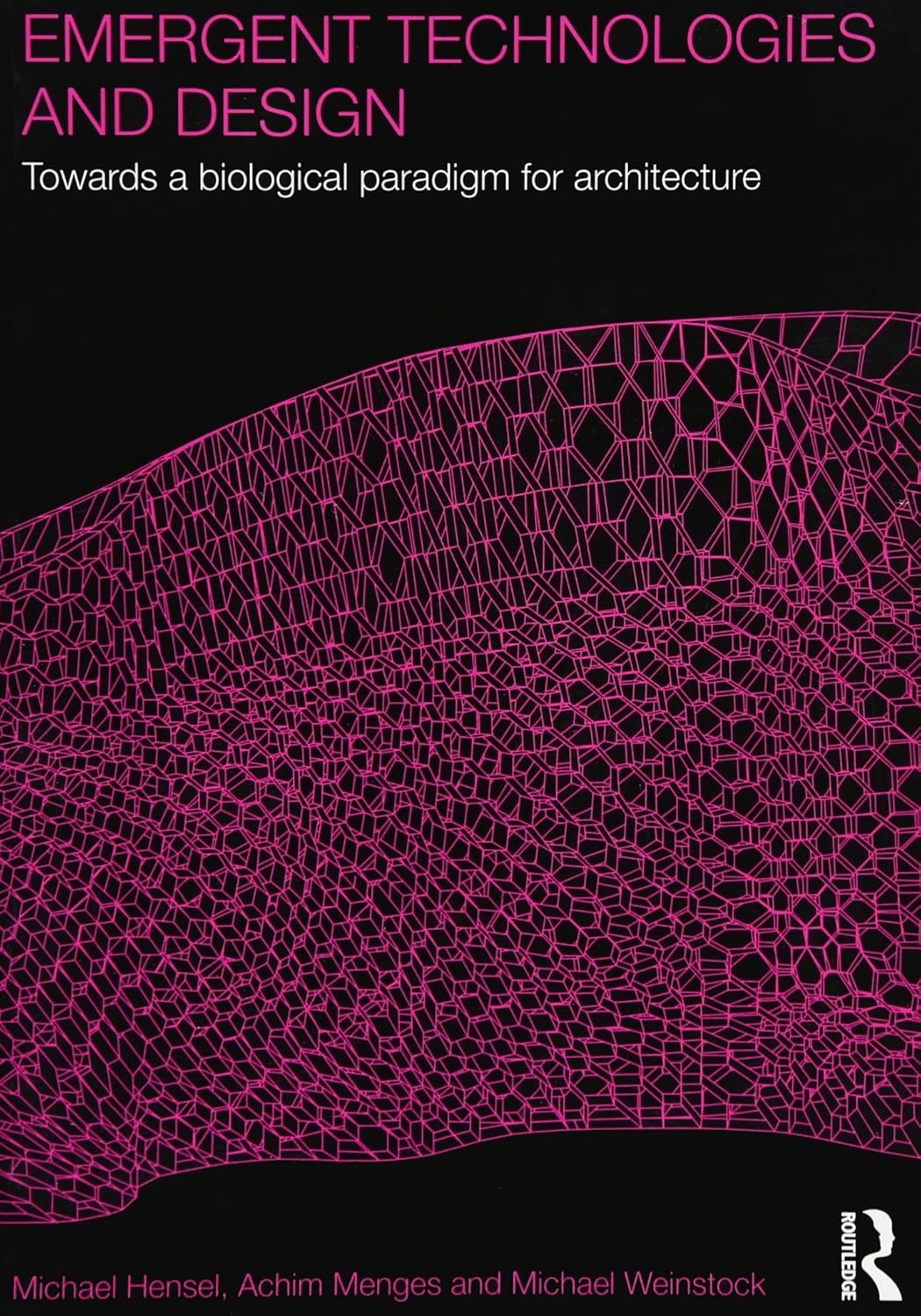
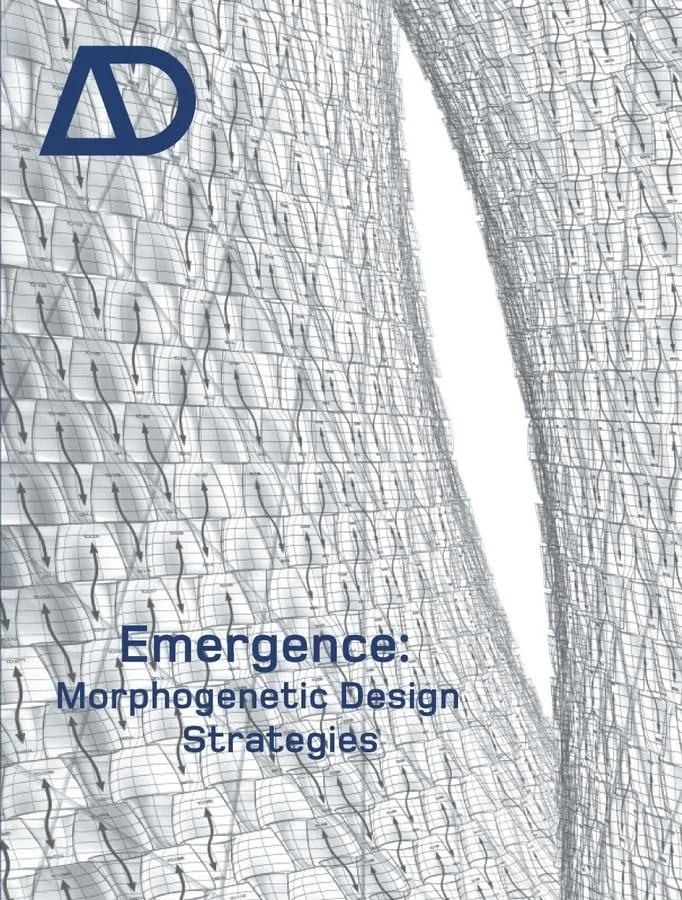
Emergence - the process by which new and coherent structures, patterns and properties ‘emerge’ from within complex systems
Traditional architecture starts from the premise that architectural structures are singular and fixed, and however well integrated are separate from their environment and context. Emergence requires that the opposite is true – that those structures are complex energy and material systems that have a lifespan, exist as part of an environment of other active systems, and develop in an evolutionary way. This book, based on the authors’ internationally renowned Emergent Technologies and Design course at the Architectural Association in London, introduces a new approach to the practice of architecture. The authors use essays and projects to demonstrate the interrelationship of concepts such as emergence and self-organisation with the latest technologies in design, manufacturing and construction. With projects from their course, and critiques and commentary from some of the world’s leading design theorists and practitioners, the authors of Emergent Technologies and Design have introduced a radical new way of understanding the way in which architecture is conceived, designed and produced.
-
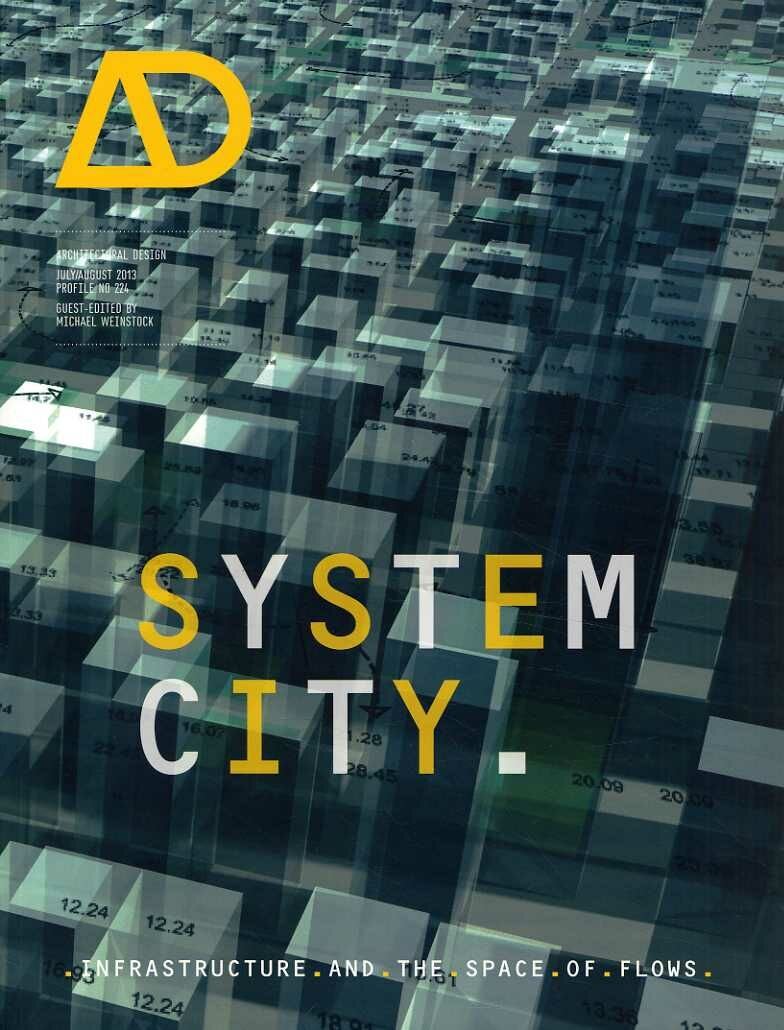
Here, Guest-Editor Michael Weinstock with Mehran Gharleghi of the EmTech programme at the Architectural Association (AA) School of Architecture in London shift the defi nition of the intelligent city away from one that is predicated on information and communication technologies towards a deeper and more profound characterisation. They explore the possibilities of cognitive complexity in urbanism emerging out of the interaction of sensory processing and behavioural responses to the world. Within the context of large infrastructural systems, what might, for instance, rapidly developing machine consciousness have in common with collective intelligence? What could the preliminary conceptual schema be for an intelligent city that is suffi ciently self-aware to synchronise its systems with climatic and ecological phenomena at regional and local scales?
https://onlinelibrary.wiley.com/doi/pdfdirect/10.1002/ad.1619
-
Cities, and their componentbuildings and infrastructuralsystems, have developed rapidly inresponsive and adaptive capacities.Ubiquitous computation andnew informational technologiesare increasingly embedded in thephysical and social processes ofthe city. Here, Michael Weinstockidentifies ‘sentience’, or theability to be aware, as the primarydriver of innovation in the urbanenvironment; as the extended‘nervous system’ of a city developsthe potential to sense changes in thecity’s flows, and in its internal andexternal environments.
-
The tower2 typology preserves the vision and ambitions of modern cultural and technological production. As the symbol of Modernism, the tower agenda is still defined today by standardization, repetition, segmentation, and orthogonal grid based structures. This agenda has instigated the potential of the tower to be reduced to binary axioms, such as tower and city, circulation and habitation, structure and skin.3 Combined with the global economic and cultural motives for the tower, which are emphasized through parameters such as dense urban contexts, high real estate values, commercial opportunity, corporate demand, and iconic presence, the tower has become a self-referential object that has limited connection to its urban context.
-
Conventionally, material in architecture has been treated as the ‘servant’ of form. An iterative design process, though, that continuously integrates material, form and force has the potential to unfold a new generative logic of form-finding. This offers ways of processing the flow of forces through a material object and balancing variations of form with the organisation and behaviour of material. Toni Kotnik and Michael Weinstock present a series of experimental construction projects, developed within the Emergent Technologies and Design (EmTech) programme at the Architectural Association (AA) in London, that explore the intricate relationship between material, form and force.
-
The anthropologist Claude Lévi-Strauss described the city as ‘a congregation of animals who enclose their biological history within its boundaries and at the same time through their every conscious action mould and shape it. By both its development and its form, it belongs simultaneously to biological procreation, organic evolution, and aesthetic creation. It is at one and the same time an object of nature and a subject of culture; an individual and a group; something lived and something dreamed; the supreme human achievement.’1 Half of all humans alive today live in cities, although the geographical pattern is uneven; in Europe and North America, four out of every fi ve people live in cities. As the world population continues to grow, existing cities are expanding and new cities are being built, connected and integrated into the world system. The urbanisation of the world is accelerating, and it is thought that within less than two generations there will be an additional 2 billion urban dwellers, most of whom will be located in Southeast Asia, China, India and Africa.
-
The traditional approach to urban design studies has been based on what can be described as a generalised anatomical model, e.g., functional zoning coupled to metaphors such as green areas serving as the ‘lungs’ of cities. Despite the frequent use of biological metaphors, urban design has generally proceeded from an understanding of cities as static arrays of buildings and infrastructures that exist in, but are distinct from, stable environments. But this approach does not reflect the dynamic systems of cities throughout history, nor their close coupling to the dynamics of their local environment, climate and ecology, and now the global dynamics of culture and economy. The limitations of this approach, in which cities are treated as discrete artefacts, rather than nodes interconnected by multiple networks, are compounded by the legal and regulatory boundary of the city usually being defined as an older core, so that cities are regarded as something quite separate from their surrounding territory. All cities have administrative boundaries, but cities are very rarely either physically or energetically contained within those administrative boundaries. In the past, cities gathered most of the energy and materials they needed from their immediate local territory, and trade linked systems of cities across whole regions. The growth and vitality of many cities are no longer dependent on the spatial relationship with their immediate environs but on the regional and global flows of resources. The flow of materials, information and energy through cities comes from far outside their physical and regulatory (municipal) boundaries. Cities now extend their metabolic systems over very great distances, so that the extended territory of the urban metabolism of a city and its geographical ‘place’ are often completely decoupled.
https://papers.cumincad.org/data/works/att/acadia11_40.content.pdf
-
Emergence is one of the most exciting new fields in architecture today, gaining interest from not only academics and students but also leading professionals, with directors from Fosters, Arup and Bentley Systems all attending the most recent symposium on the subject at the Architects Association, London. As a concept, Emergence has captured the zeitgeist, embodying the pervasive cultural interest in genetics and biological sciences. In the sciences, Emergence is an explanation of how natural systems have evolved and maintained themselves, and it has also been applied to artificial intelligence, information systems, economics and climate studies. The potential of the mathematics of Emergence that underlie the complex systems of nature is now being realised by engineers and architects for the production of complex architectural forms and effects, in advanced manufacturing of ‘smart’ materials and processes, and in the innovative designs of active structures and responsive environments.
-
Traditional architecture starts from the premise that architectural structures are singular and fixed, and however well integrated are separate from their environment and context. Emergence requires that the opposite is true – that those structures are complex energy and material systems that have a lifespan, exist as part of an environment of other active systems, and develop in an evolutionary way. This book, based on the authors’ internationally renowned Emergent Technologies and Design course at the Architectural Association in London, introduces a new approach to the practice of architecture. The authors use essays and projects to demonstrate the interrelationship of concepts such as emergence and self-organisation with the latest technologies in design, manufacturing and construction. With projects from their course, and critiques and commentary from some of the world’s leading design theorists and practitioners, the authors of Emergent Technologies and Design have introduced a radical new way of understanding the way in which architecture is conceived, designed and produced.
-
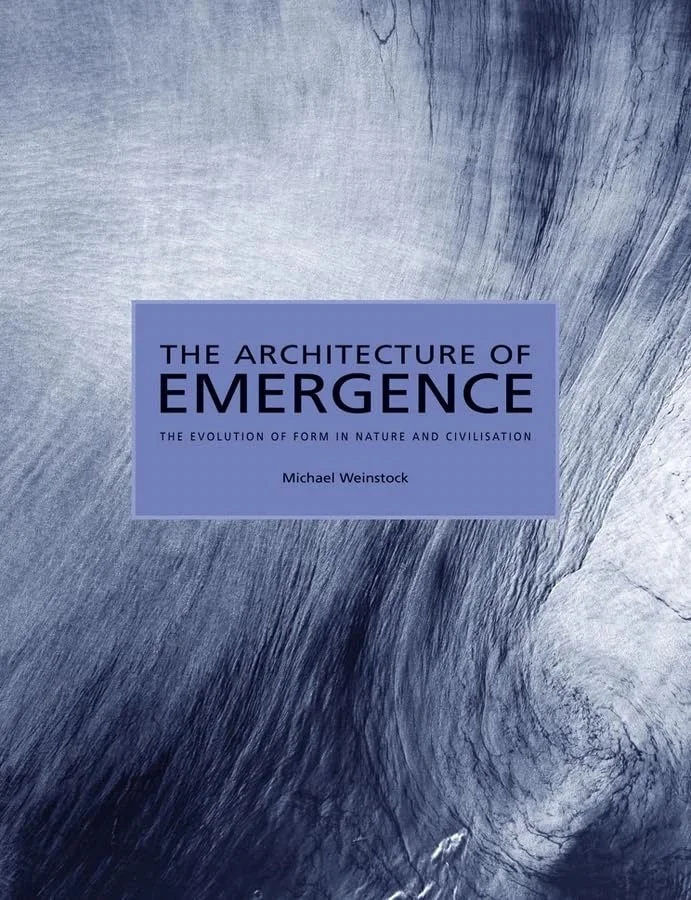
Earlier this year, Michael Weinstockpublished a seminal book, The Architectureof Emergence: The Evolution of Form inNature and Civilisation, which challengesestablished cultural and architecturalhistories. The conventional worldview isexpanded by placing human developmentalongside ecological development: thehistory of cultural evolution and theproduction of cities are set in the context ofprocesses and forms of the natural world.As well as providing a far-reaching thesis,Weinstock’s book gives lucid and accessibleexplanations of the complex systems of thephysical world. In this abridged extractfrom Chapter 5, Weinstock explains thedynamics of individual and collectivemetabolisms from which intelligence andsocial and spatial orders emerge.
-
Michael Weinstock’s significant new bookThe Architecture of Emergence: The Evolutionof Form in Nature and Civilisation calls intoquestion the received notion of culture.Rather than perceiving civilisation asintrinsically human or humanist, standingoutside and beyond nature, Weinstockpositions human development alongsideecological development: the history ofcultural evolution and the production ofcities are set in the context of processes andforms of the natural world. In this extractfrom Chapter 7, Weinstock charts how theproliferation of cities and systems of citiesand their extended metabolic systems acrossthe world were characterised by episodic andirregular expansions, consolidation, collapseand subsequent reorganisation.
-
-
-
Michael Weinstock describes the constraints and creativity behind the Wave Canopy, the EmTech Masters programme construction project for 2009, which was located on the upper terrace of the Architectural Association's premises in Bedford Square
-
Architecture is on the cusp of systemic change, driven by the dynamics of climate and economy, of new technologies and new means of production. There is a growing interest in the dynamics of fluidity, in networks and in the new topologies of surfaces and soft boundaries. This is part of a general cultural response to the contemporary reconfiguration of the concept of ‘nature’ within the discourse of architecture; a change from metaphor to model, from ‘nature’ as a source of formal inspiration to ‘nature’ as a mine of interrelated dynamic processes that are available for analysis and digital simulation. Michael Weinstock presents an account of the dynamics of natural metabolisms, and suggests an agenda for the development of metabolic morphologies of buildings and cities.
-
So far the Unit Factor series has focused on design research within the context of the Architectural Association in London. Here the series editor, Michael Weinstock, discusses the possibilities of architects undertaking research in practice. He draws on the experience of Chris Bosse, who is responsible for the competition-winning design for the Watercube, Beijing’s National Swimming Centre.
-
In the second part of this mini ‘Unit Factor’ series on design as research (seeprevious article inAD, Vol 78, No 3, 2008), MMiicchhaaeell WWeeiinnssttoocckk turns his attention tofabrication. He explores this through the pioneering work of designtoproduction, afirm who have made it their business to realise complexity in architecture.
-
The mythical monsters of the classical world were imaginary creatures, composed of parts of known animal forms and the human body. The Sphinx, for example, had the head of a woman, the body of a lion and the wings of a bird. The Minotaur had the body of a man and the head of a bull, and the Centaur had the body of a horse and the head and torso of a man. These monsters were mutations of the human body, deviations from the ideal of harmonious proportion and beauty, beings that united mankind and animals. Other monsters, like the Chimera, a fire breathing monster that had the head of a lion, the body of a goat and the tail of a serpent, were entirely composed of animal forms. Cerberus had three dogs' heads, a serpent tail, and many serpents' heads on his back.
-
-
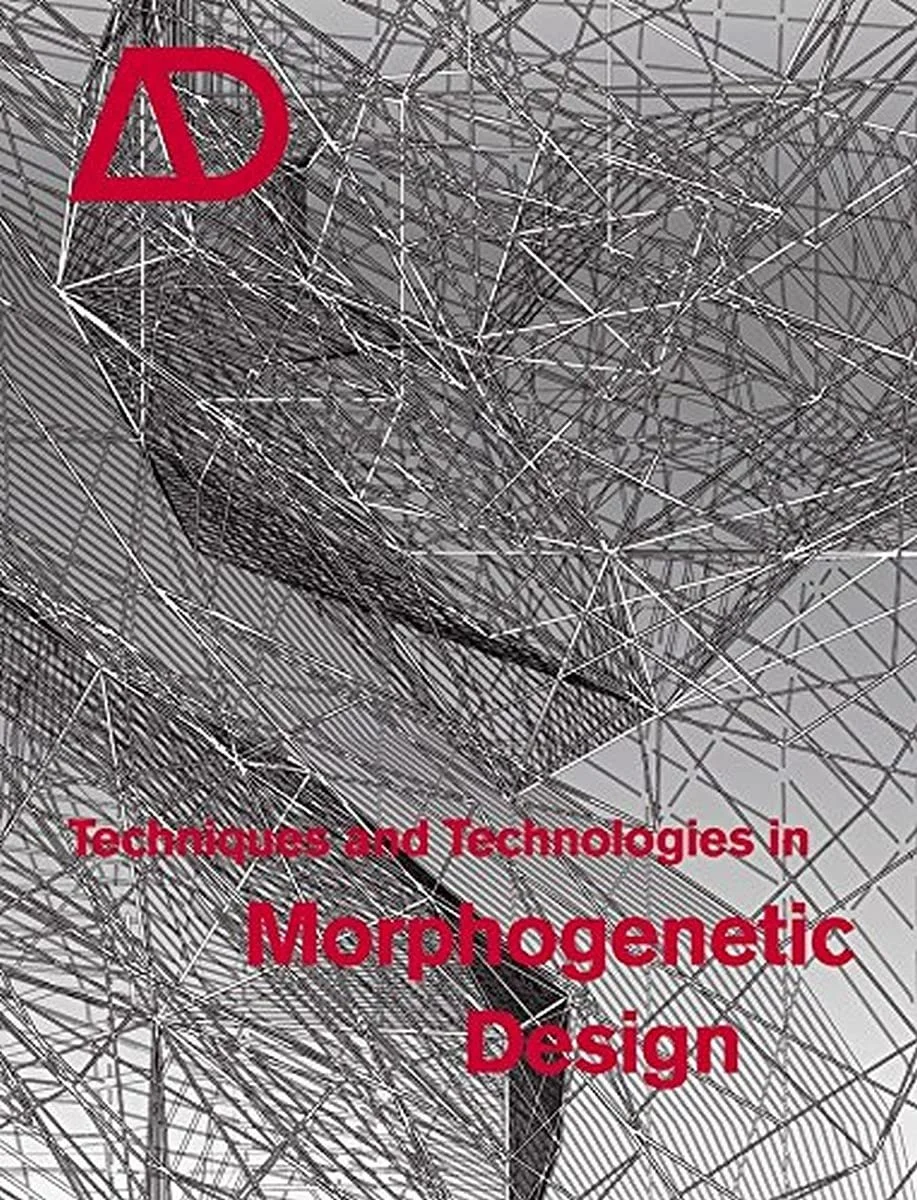
This issue of AD introduces a new approach to architectural practice based on the interrelationship of emergence and self-organisation concepts. A sequence to the successful Emergence: Morphogenetic Design Strategies title by the same guest-editors, it advances on the previous publication by taking on board the latest developments for fully integrated design evolution, manufacturing and construction. Emergence requires the recognition of architectural structures not as singular and fixed bodies, but as complex energy and material systems that have a lifespan, exist as part of the environment of other active systems, and as an iteration of a series that proceeds by evolutionary development. Thus the focal point of this issue will be the exploration of techniques and technologies that enable the implementation of such morphogenetic strategies, requiring a new set of intellectual and practical skills. Though the publication stands alone as an investigation and presentation of cutting-edge techniques and technologies within the design and construction field supported by examples from adjacent industries, it also introduces a new springboard for understanding and rethinking the radical changes in which architecture is now being conceived, designed and produced. While representing a timely exploration of the embedding of techniques and technology in an alternative design approach, it also presents wholly new strategies for tackling issues of sustainability.
https://www.amazon.co.uk/Techniques-Technologies-Morphogenetic-Design-Architectural/dp/0470015292
-
Classical engineering is driven by efficiency, with a precise economy of materials and structures for specific conditions. Michael Weinstock explains how, conversely, biology has evolved redundancy as a deep strategy, with hierarchical arrangements of cells and tissues producing sufficient excess capacity for adaptation to changing environmental stresses. He explains how, with the assistance of George Jeronimidis and Nikolaos Stathopoulos, the Emtech masters programme at the Architectural Association (AA) has explored the integrated morphologies of plants, an analysis that reveals new models for engineered structures.
-
Cellular biological materials have intricate interior structures, self-organised in hierarchies to produce modularity, redundancy and differentiation. As Michael Weinstock explains, the foam geometries of cellular materials offer open and ductile structural systems that are strong and permeable, making them an attractive paradigm for developments in material science and for new structural systems in architecture and engineering.
https://onlinelibrary.wiley.com/doi/pdfdirect/10.1002/ad.238
-
Simulations are essential for designing complex material systems, and for analysing their behaviour over extended periods of time. As Michael Weinstock and Nikolaos Stathopoulos explain, working with simulations requires the development of a mathematical model of physical processes, and generative computational design can now inexpensively incorporate the advanced physics of nonlinear behaviour to explore the dynamic changes that structures and materials undergo in response to changing conditions.
-
‘Only connect!’ Despite the proliferation of interactivity technologies for domestic spaces, current commercial models for the smart house remain focused on the supply of gizmos and multimedia flatscreens. What is the design potential for connectivity in the home? Mike Weinstock asks how interactive technologies might achieve a new level of topographical and environmental change and enhance the spaces in which we live.
-
This chapter presents two essays by Michael Hensel, Achim Menges and Michael Weinstock. The essays highlight that the mathematical techniques for modelling the emergence of forms and behaviour from the complex systems of the natural world are juxtaposed with form-finding techniques for stable and dynamic material forms. Focus is placed on geometry, pattern and behaviour, and the computational and material evolution of ‘populations’ and ‘species’ of architectural forms with complex behaviour. This is followed by a discussion on the adaptive behaviour of natural and architectural material systems and the industrial potential for a seamless integration of their design and production. Natural morphogenesis, the process of evolutionary development and growth, generates polymorphic systems that obtain their complex organisation and shape from the interaction of system-intrinsic material capacities and external environmental influences and forces. Five morphogenetic design experiments are finally discussed.
https://www.researchgate.net/publication/316156362_Morphogenesis_and_Emergence_2004-2006
-
-
-
-
-
-
-
-
-
-
-